Mole Tunnel Math: How Much Damage Is Really Happening Under Your Lawn?
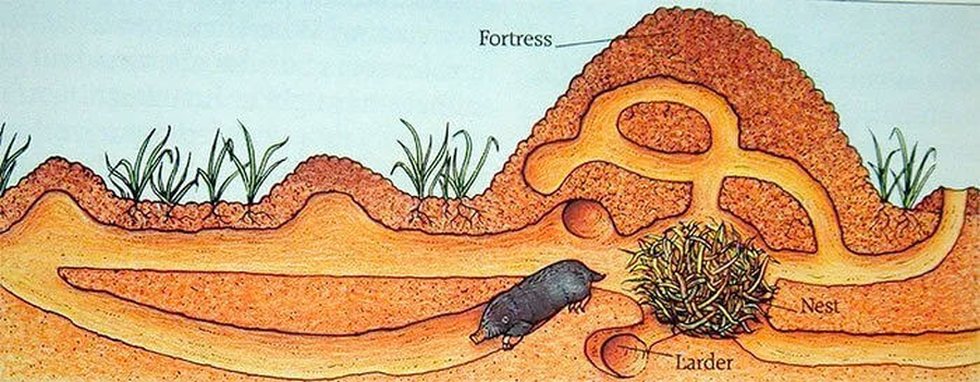
At Northwest Mole Pros, we know the molehills you see on the surface are only part of the story. The real damage happens underground, where moles displace huge amounts of soil while building their tunnel systems. Once you understand how much dirt a mole moves, you’ll see just how serious a mole infestation can be.
📌 Why Molehills Appear: The Basics of “Moleology”
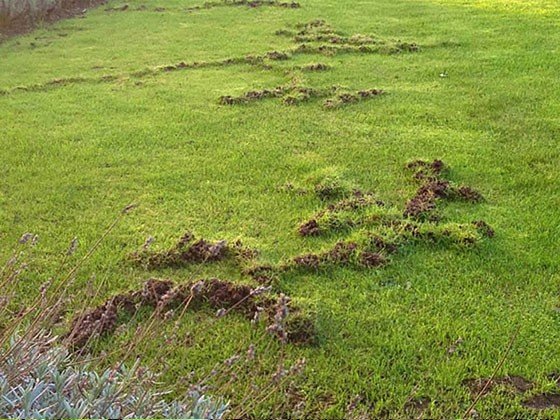
Most homeowners first discover moles when mysterious dirt mounds pop up in the yard. Those mounds reveal two fundamental truths:
Moleology Law #1:
Moles dig tunnels to find food and survive.
Moleology Law #2:
Moles push the displaced soil to the surface, creating molehills.
From here, homeowners usually fall into one of two camps:
- Camp 1: “How do I stop these things from destroying my yard?”
- Camp 2: “They’re part of nature — I’ll just repair the damage.”
But both groups share the same question:
How big is the underground tunnel system causing all this mess?
Let’s break it down.
📏 How Extensive Is a Mole Tunnel System?
A homeowner’s lawn (about 15 ft × 50 ft, or 750 sq. ft.) showed several fresh mole mounds. The displaced dirt was collected into a pile measuring roughly:
- 4 ft long
- 3 ft wide
- 1.5 ft high
Using geometric modeling (a truncated cone + trapezoidal prism), the total dirt volume came to 8.1 cubic feet.
🧮 Converting Dirt Volume Into Tunnel Length
Most mole tunnels measure 1.5 to 2 inches in diameter. When we run the 8.1 cubic feet of soil through a pipe‑volume calculator:
- A 1.5-inch tunnel equals ~660 feet of tunnel
- A 2.0-inch tunnel equals ~371 feet of tunnel
Even a half‑inch difference dramatically changes the total length — but it gives us a realistic range.
Tunnel Density Estimate:
Across a 750 sq. ft. lawn, that equals:
- 0.49 to 0.88 feet of tunnel per square foot
- Or roughly 6–10 inches of tunnel per square foot of lawn
That’s a massive amount of underground activity for a relatively small yard.
🧠 What This Means for Homeowners
Moles do not tunnel evenly across a lawn. They concentrate activity where food is abundant, then expand outward. But now we have a reliable estimate of how dense a mole tunnel system can be — and why mole damage spreads so quickly.
🛠️ NW Mole Pros Makes Mole Tunnel Math Easy
If all this math makes your head spin, don’t worry — we handle the calculations and the moles.
Homeowners in North King County and South Snohomish County trust Northwest Mole Pros for:
- Fast, professional mole removal
- Accurate assessment of mole activity
- Guaranteed results
If you’re seeing mounds, tunnels, or soft spots, it’s time to act.
📞 Call (425) 368‑3700
📧 customercare@nwmole.com
🌐 nwmole.com
Let us take the guesswork — and the moles — out of your yard.
next.